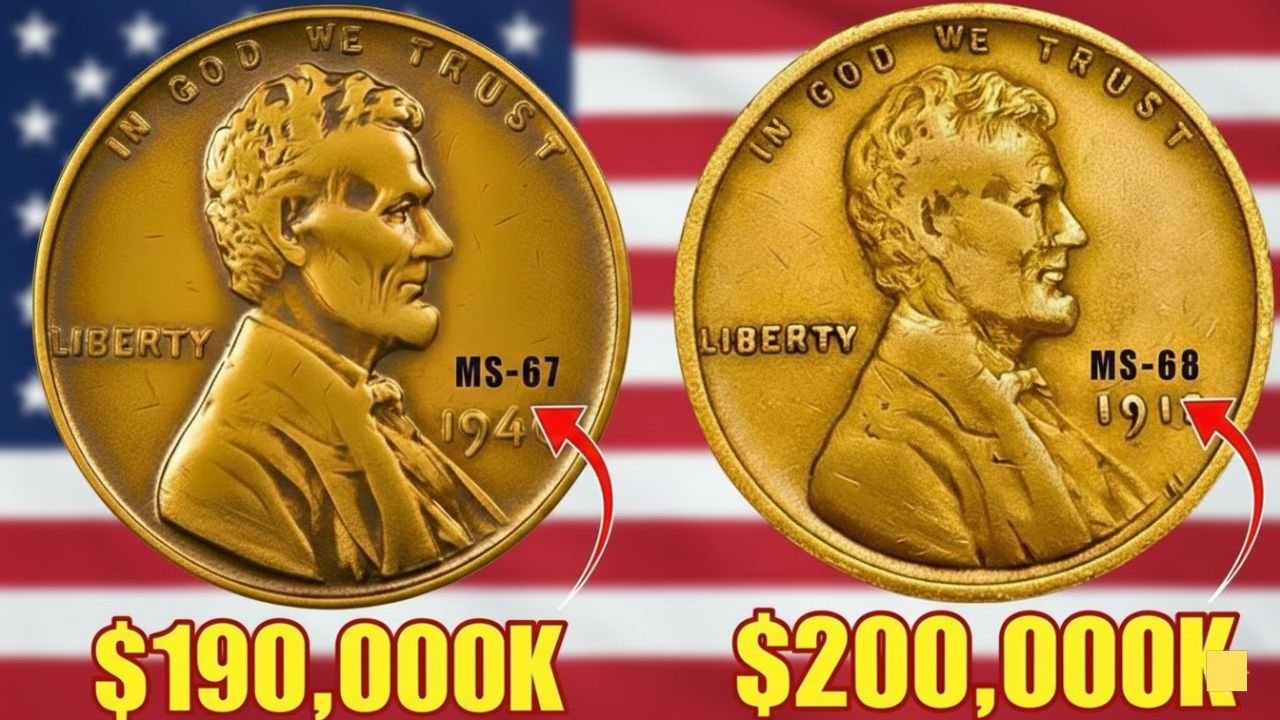
Wheat Penny Values Over Time : For over a century, the humble Wheat Penny has nestled in pockets, jingled in cash registers, and sparked fascination in collectors. Minted from 1909 to 1958, this coin featuring Abraham Lincoln and two sturdy wheat stalks is more than currency; it’s a tangible piece of American history. Its journey from everyday spending money to a coveted collectible tells a story of changing values, historical context, and the passionate community of numismatics. This article explores the evolution of the Wheat Penny’s significance and provides a clear guide for understanding its place in collections today.
The Humble Beginnings and Growing Appreciation
Introduced in 1909 to commemorate the 100th anniversary of Abraham Lincoln’s birth, the Wheat Penny was initially met with great public interest but was seen purely as utilitarian money. For the average person in the early 20th century, it was simply the new one-cent piece. However, even in these early days, subtle variations and lower mintages for certain years and mint marks—like the famed 1909-S VDB—planted the seeds for future rarity. It was during the economic trials of the Great Depression and the postwar boom that people began to look more closely at their change, saving coins and starting collections. This grassroots interest transformed the penny from mere cash to a keeper of stories and a potential heirloom.
A Guide to Key Wheat Penny Information
The table below provides a snapshot of some notable dates and their approximate value ranges in lower circulated (Good-VG) and higher uncirculated (MS-60+) grades. These are retail estimates and actual prices can vary based on exact condition, market demand, and professional certification.

| Coin Date & Variety | Approx. Value (Circulated) | Approx. Value (Uncirculated) | Key Notes |
|---|---|---|---|
| 1909-S VDB | $600 – $1,200 | $2,500 – $6,000+ | The classic key date. Low mintage, high demand. “VDB” are designer’s initials on reverse. |
| 1914-D | $175 – $400 | $3,000 – $10,000+ | One of the rarest non-error dates from the Denver mint. |
| 1922 “No D” | $500 – $1,000 | $10,000 – $30,000+ | Die polish removed the “D” mintmark, making it appear as a Philadelphia issue. |
| 1931-S | $40 – $100 | $500 – $2,000+ | Lowest mintage coin of the Great Depression era. |
| 1943 Bronze | $100,000 – $200,000+ | $500,000+ | Extremely rare error. Most 1943 pennies are steel; a bronze one is a major find. |
| 1955 Double Die Obverse | $1,000 – $2,500 | $10,000 – $30,000+ | Iconic error coin with visibly doubled lettering and date. |
Condition The Cornerstone of Value
A pivotal lesson in collecting Wheat Pennies is understanding the profound impact of condition. A coin’s state of preservation is often the single greatest factor in its value. Heavily circulated pennies, showing wear on Lincoln’s cheekbone or the wheat stalks, are common and valued modestly. In stark contrast, a penny preserved in “Mint State”—as if it just left the Philadelphia, Denver, or San Francisco mint—can be worth hundreds or thousands of times more. The advent of professional, third-party grading services has brought clarity and confidence to the market, allowing collectors to accurately assess and invest in coins based on standardized scales from “Good” to “Mint State.”
Noteworthy Varieties and Mint Errors
Some of the most captivating chapters in the Wheat Penny story are written by accident. Mint errors, born from mechanical hiccups during production, have created extraordinary rarities. The most famous is the 1955 Double Die Obverse, where the coin’s design elements, including the date, appear dramatically doubled. Initially spent as ordinary change, it is now a legendary collectible. Other sought-after varieties include the 1922 “No D” penny from Denver and coins with repunched mint marks. These unique pieces highlight the human and mechanical aspects of coin production and are consistently pursued by advanced collectors.

Market Evolution and Collecting as a Pursuit
The market for Wheat Pennies has matured significantly. While values for key dates have shown a strong long-term upward trend, they are influenced by collector demand, economic conditions, and auction activity. Unlike speculative assets, these coins derive stability from their finite supply and historical narrative. Today, collecting Wheat Pennies is a multifaceted hobby. Some enthusiasts aim to complete a date-and-mint-mark set, others focus on finding superb examples in circulation, and many simply enjoy the connection to the past that holding these coins provides. It’s a pursuit that balances historical inquiry with the thrill of the hunt.
Frequently Asked Questions (FAQ)
Q: What is a Wheat Penny?
A: It is the popular name for the Lincoln Cent minted from 1909 to 1958, characterized by two wheat stalks on the reverse (back) of the coin.

Q: How can I tell if my Wheat Penny is valuable?
A: Check the date and mint mark (a small letter under the year: “D” for Denver, “S” for San Francisco, none for Philadelphia). Then assess its condition. Coins from key dates (like 1909-S VDB, 1914-D) or with obvious errors in better condition are typically more valuable. Consulting a price guide or a reputable coin dealer is recommended.
Q: Where is the mint mark on a Wheat Penny?
A: On most years, the mint mark is on the obverse (front), under the date. On coins from 1909-1916, it is on the reverse, below the wheat stalks.

Q: Are all Wheat Pennies worth more than one cent?
A: Almost all are worth more than face value due to their copper content and collectibility. Even common, heavily circulated dates are often worth 3 to 10 cents. True significant value, however, is tied to rarity and condition.
Q: What should I do if I think I have a rare Wheat Penny?
A: Handle it carefully by the edges to avoid adding fingerprints or damage. Research its date and mint mark online. For a potentially high-value coin, consider having it authenticated and graded by a professional service like PCGS or NGC.
Q: Why were Wheat Pennies discontinued?
A: In 1959, the design was changed to the Lincoln Memorial reverse to mark the 150th anniversary of Lincoln’s birth, refreshing the coin’s appearance after 50 years.
The legacy of the Wheat Penny endures because it represents a bridge between everyday American life and historical preservation. Each coin, whether a common 1940s piece or a rare 1909-S VDB, carries a silent narrative of its era. For collectors, the pursuit is a rewarding blend of detective work, historical study, and the simple joy of preserving a piece of the past for future generations.
