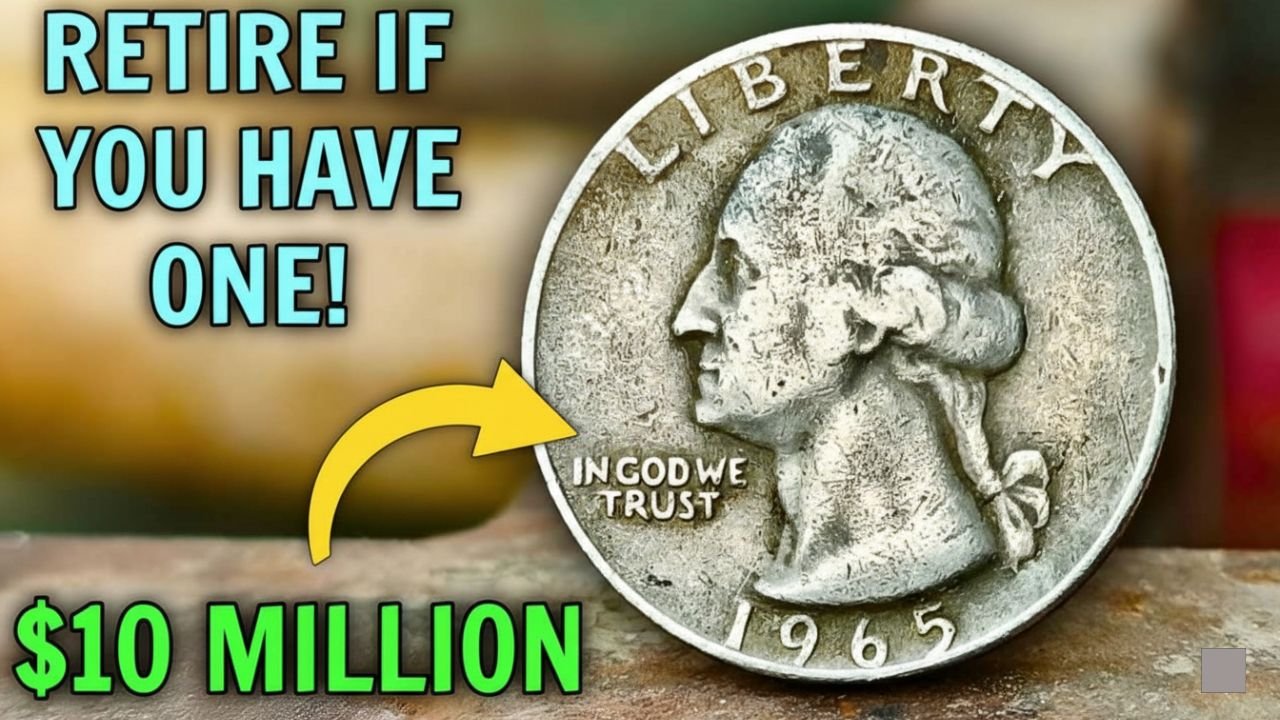
Valuable Rare U.S. Quarters : Imagine finding a coin in your spare change worth more than a car. This isn’t a fantasy; for coin collectors, it’s a thrilling possibility. The humble quarter, a workhorse of American commerce, can sometimes be a rare artifact carrying a surprising historical and financial premium. This guide explores the fascinating world of numismatics—the study of coins—and reveals how ordinary-looking quarters can transform into extraordinary collectibles.
The Evolution of the American Quarter
The story of the U.S. quarter begins in 1796, shortly after the nation’s birth. These early coins, known as Draped Bust quarters, featured an allegorical Lady Liberty and set the stage for a rich numismatic history. The design has continually evolved, mirroring America’s own journey. The 20th century introduced enduring series like the Barber quarters (1892-1916), named for their designer, and the iconic Washington quarter in 1932, minted to commemorate the first president’s bicentennial. Renewed public engagement came with the 50 State Quarters program (1999-2008), which turned pocket change into a collectible portrait of the nation. Each shift in design offers a tangible link to the artistic and cultural sentiments of its time.
What Gives a Quarter Its Value?
Several key factors elevate a quarter from mere currency to a coveted collectible.
- Rarity: Low mintage numbers are the primary driver of value. Coins produced in smaller quantities, often from specific mints in certain years, are naturally harder to find.
- Condition (Grade): A coin’s state of preservation is paramount. Collectors use a precise scale from “Poor” to “Mint State-70” (perfect uncirculated). Quarters without wear, with original luster and sharp detail, command exponentially higher prices.
- Historical Significance: Coins from pivotal years, first years of issue, or those with short-lived designs carry added weight for historians and collectors.
- Errors and Varieties: Mistakes made during the minting process, such as coins struck on the wrong metal blank (planchet), off-center designs, or doubled elements, create unique, sought-after specimens.
- Metallurgical Composition: Quarters minted in silver (90% silver pre-1965) have intrinsic bullion value, while unusual compositions can indicate rare error coins.
Notable Quarters and Their Stories
Certain quarters have achieved legendary status in the collecting community due to a perfect storm of rarity, history, and condition.
- 1932-D Washington Quarter: Struck in the first year of the Washington design during the Great Depression, the Denver mint produced fewer than 440,000 of these coins. In top condition, it is the key date of the entire series and a cornerstone of any advanced collection.
- 1916 Standing Liberty Quarter: This beautiful design had a very limited first-year mintage. More notably, the initial design featured Liberty with an exposed breast, which was quickly modified. The early version, especially in high grades, is exceptionally rare and valuable.
- 1970-S Washington Quarter Struck on a 1941 Canadian Planchet: This is a famous mint error. A few proof quarters at the San Francisco Mint were accidentally struck on a leftover Canadian 25-cent planchet, creating a unique hybrid coin. Only a handful are known to exist.
- 1804 Draped Bust Quarter: As an early-year issue with extremely low survival rates in any condition, this quarter represents the dawn of U.S. coinage and is a monumental rarity.
A Collector’s Reference Table
| Quarter Type | Key Date/Mint Mark | Mintage | Notable Feature | Estimated Value Range (Circulated to High Grade) |
|---|---|---|---|---|
| Draped Bust | 1804 | 6,738 | Early federal issue, very rare | $15,000 – $200,000+ |
| Barber | 1901-S | 72,664 | Key low-mintage coin from San Francisco | $1,500 – $150,000+ |
| Standing Liberty | 1916 | 52,000 | First year, original design | $2,000 – $100,000+ |
| Washington | 1932-D | 436,800 | First year, low Depression-era mintage | $150 – $25,000+ |
| Washington (Error) | 1970-S on 1941 Can. Planchet | ~12 known | Major mint error, wrong planchet | $35,000 – $100,000+ |
| 50 State Quarters | 1999-P Delaware (Extra Leaf) | Unknown | “Godless” error variety | $100 – $500+ |
| America the Beautiful | 2019-W (War in the Pacific) | 2 million | First W mint mark on quarter for circulation | $15 – $50+ (uncirculated) |
How to Begin Your Search
Turning a casual interest into an informed hunt is an engaging process.
- Examine Date and Mint Mark: Look at the obverse (heads) for the date and the reverse (tails) for the mint mark—’P’ (Philadelphia), ‘D’ (Denver), ‘S’ (San Francisco). Research key dates for each series.
- Inspect for Errors: Use a magnifying glass to check for doubling in the inscription, off-center strikes, or unusual features. Compare your coin to online images of known errors.
- Assess Condition Honestly: Avoid cleaning coins, as it permanently damages surface and value. Compare your coin to online grading guides to get a sense of its state.
- Utilize Resources: Invest in a “Red Book” (A Guide Book of United States Coins), join online forums like CoinTalk, and visit reputable dealer websites for price guides and information.
The Enduring Appeal of Coin Collecting
More than a potential investment, coin collecting is a portal to history, art, and science. It cultivates patience, sharpens observational skills, and builds a community. The thrill isn’t just in ownership, but in the pursuit—the story behind each coin and the knowledge that you are preserving a piece of tangible history. Whether you’re sifting through a handful of change or examining a certified rarity, you’re participating in a tradition that connects generations.
Frequently Asked Questions (FAQ)
Q: Can I really find a valuable quarter in my pocket change today?
A: While it’s increasingly rare, it is possible. The most likely finds are older silver quarters (1964 and earlier) or modern error coins. The most valuable classic rarities are almost never found in circulation today.
Q: I found an old quarter. How do I know what it’s worth?
A: Start by identifying its date, mint mark, and series (e.g., Barber, Washington). Then, assess its condition carefully. Use the “Red Book” or reputable online price guides for a baseline. For a definitive valuation, consider having it authenticated and graded by a professional service like PCGS or NGC.
Q: What should I do if I think I have a rare or error coin?
A: Do not clean it. Handle it carefully by the edges. Research it thoroughly online using trusted numismatic websites. Consider posting clear photos on a collector forum for initial feedback. For high-value potential, seek an appraisal from a reputable, certified coin dealer.
Q: Are proof coins valuable?
A: Yes, proof coins are specially minted with polished dies and planchets for collectors, resulting in mirror-like surfaces. They are sold in sets and are more valuable than regular circulation coins. Their value depends on the year, mint mark, and condition.
Q: Is coin collecting a good investment?
A: It can be, but it should primarily be driven by passion. The market fluctuates. The best “investment” strategy is to buy the highest-quality coins you can afford from reputable sources, focusing on rarity and condition. Education is the most important tool for any collector.
