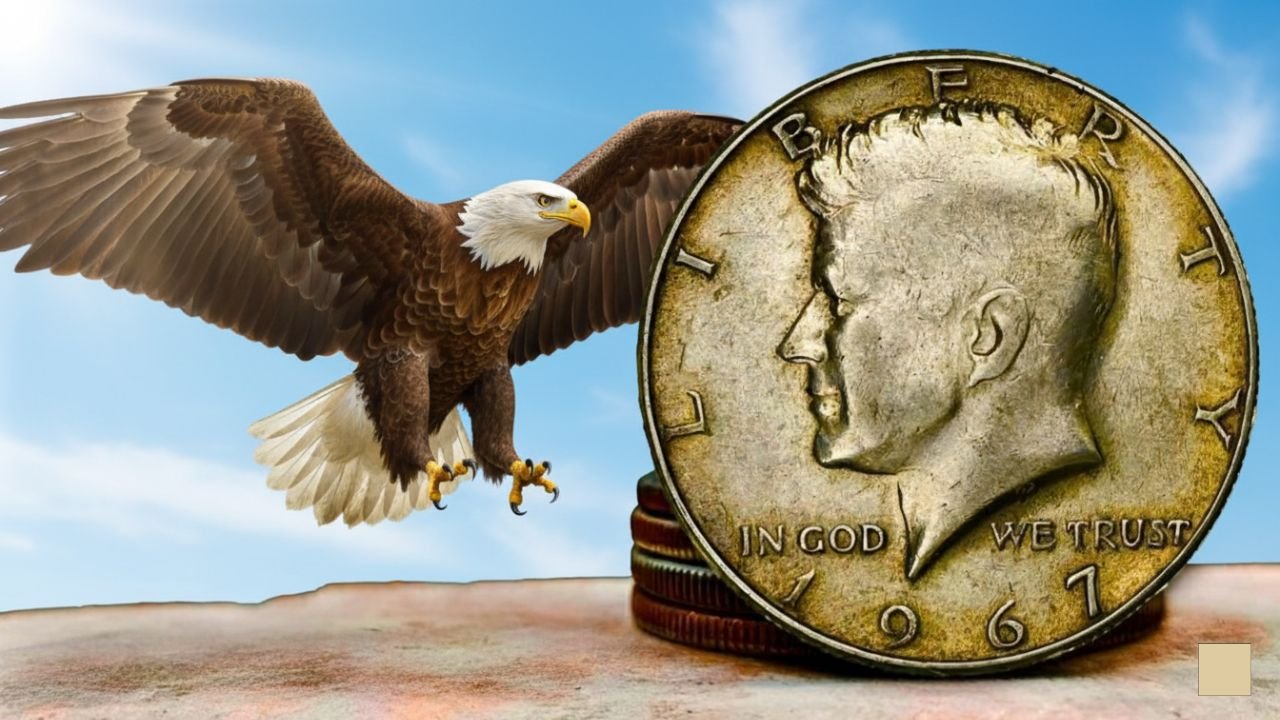
17 Rare Kennedy Half Dollars : The Kennedy Half Dollar, first minted in 1964 as a poignant tribute to the assassinated President John F. Kennedy, holds a special place in American culture and numismatics. While countless millions of these coins entered circulation, a select group of issues, distinguished by striking errors, limited production, or unique finishes, have become the crown jewels for collectors. These pieces are treasured not just for their monetary potential, but for the tangible history and minting stories they encapsulate. For enthusiasts, the pursuit is a journey through modern American coinage, where patience and knowledge can uncover remarkable value in pocket change or specialized sets.
The 1964 Accented Hair Proof
Among the earliest and most celebrated varieties is the 1964 Accented Hair Proof. This coin features a more pronounced detail in the strands of Kennedy’s hair above the ear, a design element that was quickly modified for being too bold. Struck only at the Philadelphia Mint in the first few months of proof production, these coins are a direct link to the initial wave of grief and memorialization. In flawless Proof-65 condition or higher, they represent a foundational piece for any serious collection of the series.
The 1970-D Kennedy Half Dollar
The 1970-D stands as one of the key dates in the series due to its unique circumstance. It was the only Kennedy half dollar struck for circulation that year, yet it was never officially released into general circulation. Instead, the entire mintage was included exclusively in that year’s Mint Sets. This deliberate limitation has made the 1970-D a classic rarity, highly sought-after by collectors who need it to complete their annual sets, with pristine examples commanding significant premiums.
Special Mint Set (SMS) Coins (1965-1967)
During a period when the U.S. Mint suspended proof coin production to address coin shortages, it issued Special Mint Sets from 1965 to 1967. The coins in these sets, including the half dollars, were struck with greater care than regular circulation pieces, featuring a distinctive satiny or semi-mirror finish. The 1965, 1966, and 1967 SMS half dollars are prized for their unique place in minting history and their subtle, attractive appearance, which differs markedly from both proof and business strikes.
The 1974-D Doubled Die Obverse
Error coins consistently capture collector interest, and the 1974-D Doubled Die Obverse is a prime example. This variety exhibits clear doubling of the inscriptions “IN GOD WE TRUST” and the date. Caused by a misaligned hub during the die creation process, these coins are a fascinating mistake frozen in metal. Their scarcity and the visible nature of the error make them a cornerstone for specialists in Kennedy variety collecting.
Modern Rarities 1998-S Matte Finish and 2014-W Gold
Rarity in the series extends into the modern era. The 1998-S Matte Finish Half Dollar was issued in a special two-coin set with a commemorative silver dollar. Its distinctive granular, non-reflective surface contrasts sharply with the brilliant finish of standard proofs, making it an immediate standout. The 2014-W Gold Kennedy Half Dollar, struck in West Point, was released for the 50th anniversary. Composed of three-quarters of an ounce of .9999 fine gold, it is a modern heirloom that bridges the series’ historic legacy with contemporary commemorative artistry.
Kennedy Half Dollar Key Data Table
| Coin Variety | Mint Year | Mint Mark | Key Characteristic | Estimated Value (AU/Unc/Proof Condition) |
|---|---|---|---|---|
| Accented Hair Proof | 1964 | (None) Proof | Deep accent in hair above ear | $200 – $3,000+ |
| Special Mint Set (SMS) | 1965-1967 | (None) SMS | Satiny finish, no “Proof” designation | $30 – $500+ |
| Circulation Key Date | 1970 | D | Issued only in Mint Sets | $20 – $400+ |
| Doubled Die Obverse | 1971, 1974 | D | Doubling on inscriptions | $100 – $2,000+ |
| No FG Reverse Error | 1972 | D | Missing designer’s initials (FG) | $75 – $1,000+ |
| Type 2 Proof | 1979, 1981 | S (Proof) | Clear, filled “S” mint mark | $15 – $200+ |
| Matte Finish Proof | 1998 | S (Proof) | Granular, non-reflective surface | $150 – $500+ |
| 50th Anniv. Gold | 2014 | W | .9999 gold, 3/4 oz. | ~Gold Bullion Value + Premium |
Frequently Asked Questions
Q: What makes a Kennedy Half Dollar valuable?
A: Value is driven by condition (grade), rarity (mintage figures and survival rates), and demand. Key factors include specific varieties (like doubled dies or missing initials), strikes (proof vs. circulation), metal content (silver vs. clad), and overall eye appeal.
Q: Are all silver Kennedy Half Dollars valuable?
A: All Kennedy halves minted in 1964 are 90% silver, and those from 1965-1970 are 40% silver. While their silver melt value provides a price floor (which fluctuates with the silver market), most circulated examples are worth close to this melt value. Premiums are added for exceptional condition or rare varieties within those years.
Q: Where is the mint mark on a Kennedy Half Dollar?
A: For circulation strikes (1964-2019), the mint mark is located on the obverse (front), just below Kennedy’s neck truncation. It will be a “D” for Denver, “S” for San Francisco, or “P” for Philadelphia (though “P” was not used on halves until 1979). On the 2014-W gold coin, the “W” for West Point is in the same location.
Q: What is the difference between a Proof and a Special Mint Set (SMS) coin?
A: Proof coins are struck multiple times on specially polished planchets using polished dies, resulting in a mirror-like background (field) and frosted design elements. SMS coins, made from 1965-1967, have a softer, satiny or semi-mirror finish overall, as they were struck on polished blanks but with less specialized techniques during a transitional period for the Mint.
Q: How should I store and protect my valuable Kennedy Half Dollars?
A: Always handle coins by the edges. Store them in inert materials like acid-free Mylar flips, archival-quality coin holders, or sealed slabs from professional grading services (PCGS, NGC). Avoid PVC-based plastic flips, which can damage coins over time, and keep them in a stable, dry environment.
The enduring appeal of the Kennedy Half Dollar series lies in its blend of accessible history and the thrilling possibility of discovery. From the emotionally charged first issues of 1964 to the purposeful rarities of the modern mint, each coin tells a part of a larger American story. Whether you’re examining coins from a bank roll or evaluating a certified rarity, the pursuit connects collectors to the intricate art and science of the U.S. Mint, ensuring the legacy of this iconic coin continues for generations.
