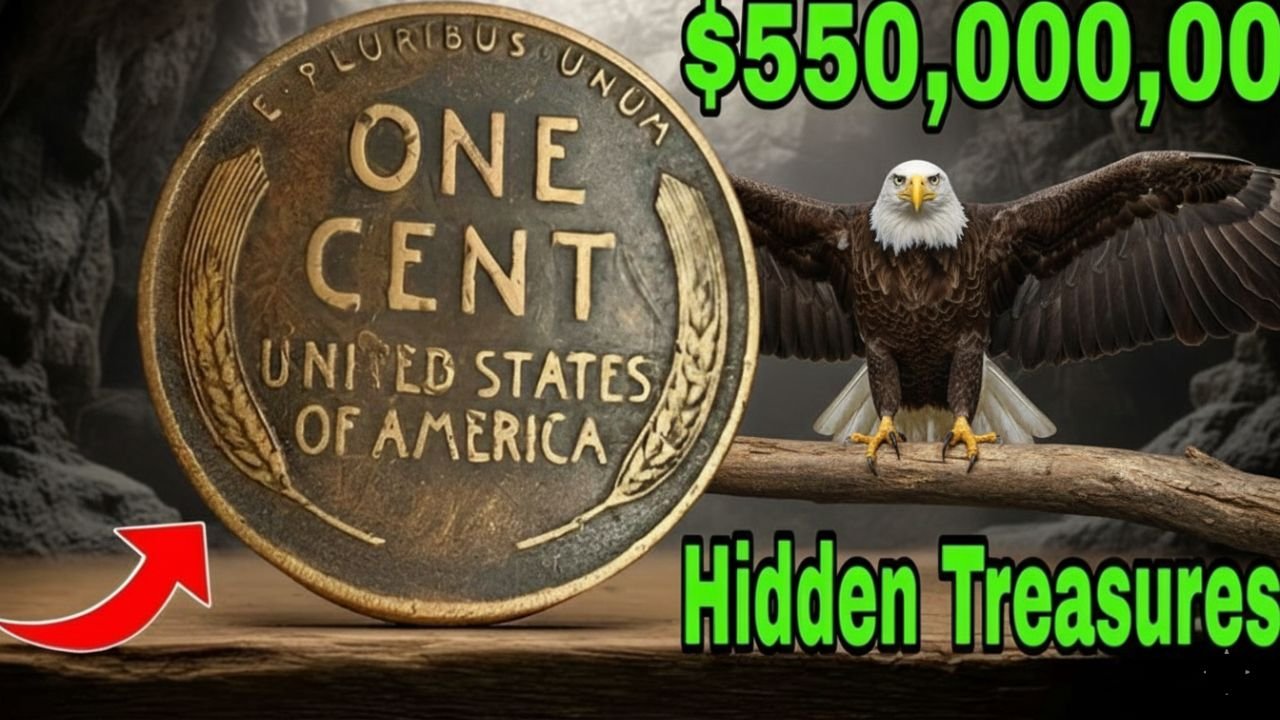
Lincoln Penny Value : For over a century, the Lincoln Penny has been a steadfast presence in American pockets and purses. More than mere currency, these coins are miniature historical archives, marking the passage of time through changing designs and subtle variations. While countless billions have been minted, a select few have ascended to legendary status, coveted by collectors for their rarity, historical context, and intriguing stories. This guide explores the fascinating world of Lincoln Penny collecting, highlighting what makes certain coins extraordinary and how you can begin your own numismatic journey.
The Birth of an Icon Honoring a President
Introduced in 1909 to commemorate the 100th anniversary of Abraham Lincoln’s birth, the Lincoln Penny broke tradition as the first regular-issue U.S. coin to feature the portrait of a real person. The esteemed sculptor Victor David Brenner created the dignified profile that still graces the obverse today. The original reverse design, showcasing two wheat stalks, earned these early coins the affectionate nickname “Wheat Pennies.” This design evolved in 1959 to feature the Lincoln Memorial and again in 2010 to display a union shield, each change reflecting a new chapter in the coin’s long history. From its inception, the penny was designed to democratize coin collecting, making the history of a beloved president accessible to every American.
Lincoln Penny Key Information Table
| Aspect | Details |
|---|---|
| First Year of Issue | 1909 |
| Designer (Obverse) | Victor David Brenner |
| Metal Composition | 1909-1942: 95% copper, 5% tin/zinc. 1943: Zinc-coated steel. 1944-1962: 95% copper, 5% tin/zinc. 1962-1982: 95% copper, 5% zinc. 1982-Present: 97.5% zinc, 2.5% copper plating. |
| Reverse Design History | Wheat Ears (1909-1958), Lincoln Memorial (1959-2008), Union Shield (2010-Present) |
| Mint Marks | P (Philadelphia), D (Denver), S (San Francisco). No mint mark = Philadelphia. |
| Key Rarity Examples | 1909-S VDB, 1914-D, 1922 “No D,” 1943 Copper, 1955 Doubled Die Obverse |
| Grading Scale | Poor (PO-1) to Mint State (MS-70). “Uncirculated” (MS) coins have no wear. |
| Why Collect Them? | Accessible, rich history, variety of series, potential for valuable finds, educational. |
Decoding Value The Significance of Date and Mint Mark
Two of the most critical factors determining a Lincoln Penny’s value are its date and mint mark. The mint mark, a small letter indicating where the coin was struck, is a key identifier. “P” denotes Philadelphia, “D” stands for Denver, and “S” represents San Francisco (though San Francisco now primarily produces proof coins for collectors). Variations in annual production numbers at each mint, often due to economic conditions or wartime needs, created inherent rarities. For instance, pennies from the Denver mint in certain early years were produced in far smaller quantities than their Philadelphia counterparts. Understanding this interplay between place, time, and survival rate is the first step in recognizing potential treasure.
Notable Rarities and Their Stories
Several Lincoln Pennies have achieved fame due to remarkably low mintages or striking errors. Their stories are woven into the fabric of American numismatics.
- The 1909-S VDB: This coin represents a perfect storm of rarity. Struck only in the first year of issue at the San Francisco Mint and bearing the designer’s prominent initials (“V.D.B.”), it saw a limited production run before the initials were removed by order of the Treasury. Its combination of first-year status, low mintage, and controversy secures its place as a “holy grail” for many collectors.
- The 1914-D: With a production of just over 1.1 million, the 1914 penny from the Denver Mint is the key scarcity of the Wheat Penny series. Its low mintage, compounded by decades of circulation, means that finding one in fine condition is a significant achievement for any collection.
- The 1943 Copper Penny: Born from the home front efforts of World War II, this coin is a famous error. In 1943, pennies were struck on zinc-coated steel blanks to conserve copper for the war. A handful of copper planchets, leftover from 1942, were accidentally struck with the 1943 die, creating one of the most celebrated and valuable error coins in U.S. history.
- The 1955 Doubled Die Obverse: This striking error resulted in a dramatic, visible doubling of the date and inscriptions on the coin’s front. Easily identifiable even to novice collectors, the 1955 Doubled Die remains one of the most iconic and sought-after error coins, a testament to how a minting mistake can become a numismatic masterpiece.
The Imperative of Condition and Preservation
A coin’s state of preservation is paramount to its value. A rare date in worn condition may hold historical interest, but its market value is a fraction of what it would be in mint state. Collectors use a standardized grading scale, from “Poor” (barely identifiable) to “Mint State” (perfect, uncirculated condition). Coins with sharp details, full luster, and no signs of wear are always in highest demand. For significant coins, professional authentication and grading by reputable services provide collectors with assurance regarding condition and authenticity, which is crucial for both buying and selling.
Starting Your Collection A Journey of Discovery
Building a Lincoln Penny collection is a rewarding and accessible pursuit. A popular starting point is assembling a “date and mint mark” set for the Wheat Penny series (1909-1958) or the Memorial series (1959-2008). Begin by examining coins from your own change and inherited collections. Reference books and online resources are invaluable for learning to identify key dates and varieties. The true joy of collecting often lies in the hunt—the possibility that a coin pulled from a handful of change or discovered in an old jar could be a scarce or better-condition example. It’s a hobby that connects you to history, art, and economics in a uniquely tangible way.
Frequently Asked Questions (FAQ)
Q: What is the most valuable Lincoln Penny?
A: The 1943 Lincoln Penny struck in copper (instead of zinc-coated steel) is considered the most valuable. In high grades, it has sold for over $200,000. Only a handful are known to exist.
Q: Where is the mint mark on a Lincoln Penny?
A: For coins minted from 1909 to 2017, the mint mark is on the obverse (heads side), below the date. Since 2017, for circulation strikes, it appears on the reverse (tails side).
Q: Are pennies from 1943 made of steel worth anything?
A: Yes, but typically not a large amount. Circulated 1943 steel pennies are common and worth a few cents to a few dollars. Their value lies in their unique history as a wartime issue. Uncirculated examples hold higher value for collectors.
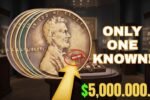
Q: I found a 1955 penny that looks doubled. Is it valuable?
A: It could be. The famous 1955 Doubled Die Obverse shows significant, clear doubling of the date and words “LIBERTY” and “IN GOD WE TRUST.” If you suspect you have one, compare it closely to authenticated images online and consider having it evaluated by a reputable coin dealer or grading service.
Q: What’s the best way to store and protect my coin collection?
A: Use archival-quality materials designed for coins, such as inert plastic flips, acid-free cardboard holders, or sealed plastic slabs. Avoid PVC plastic, which can damage coins over time. Store them in a cool, dry place, and handle coins by their edges to prevent oils from your skin from causing wear or spots.
Q: Is it worthwhile to collect modern pennies (after 1982)?
A: While most modern pennies are common, collecting can still be rewarding. You can aim for complete sets by mint mark, look for proof coins, or hunt for interesting errors. The hobby’s value often comes from the enjoyment of the pursuit and learning, not just financial gain.
The Lincoln Penny is a gateway to history, a lesson in economics, and a testament to careful craftsmanship. Whether you’re drawn to the pursuit of rare errors or the simple satisfaction of completing a historical set, these coins offer a tangible connection to the American story, reminding us that wonder and value can be found in the smallest of places.
