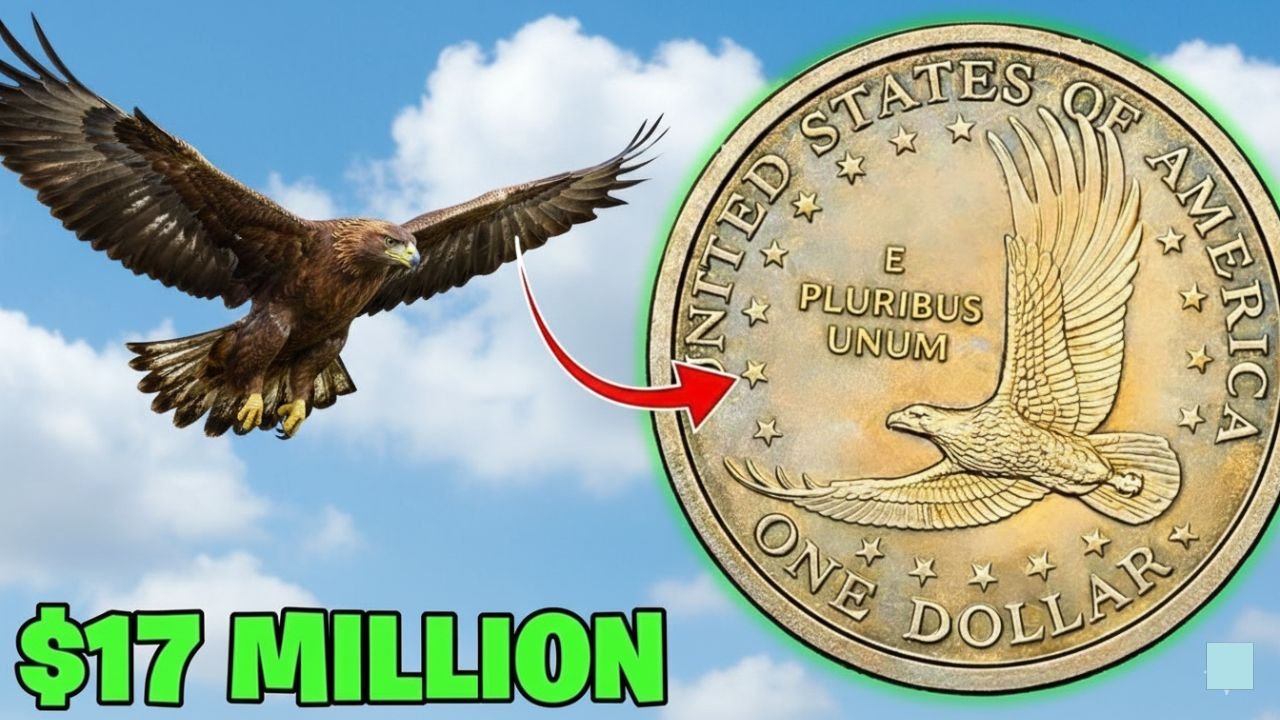
Rare $1 Sacagawea Coin : Coin collecting is a journey through time, art, and history. Each piece is a tangible snapshot of a nation’s narrative, often holding value far beyond its face amount. Among modern U.S. coinage, the Sacagawea dollar holds a special place, not only for its beautiful design and cultural significance but also for the extraordinary rarity and value of one specific variety. This article explores the legacy of this coin, guides you on how to identify potential rarities, and celebrates the historical figure it honors.
Honoring a Legacy The Inception of the Sacagawea Dollar
Introduced in the year 2000, the Sacagawea golden dollar was part of a U.S. Mint initiative to create a more user-friendly and distinct dollar coin to succeed the Susan B. Anthony dollar. The obverse (heads side) features a portrait of Sacagawea, the Shoshone interpreter and guide whose knowledge and resilience were instrumental to the success of the Lewis and Clark Expedition. Her depiction, with her infant son Jean Baptiste carried on her back, symbolizes guidance, discovery, and the vital yet often overlooked contributions of Native Americans and women to American history. The original reverse (tails side) design, used from 2000 to 2008, showcases a soaring eagle against a stylized landscape, representing freedom and expansive possibility.
While hundreds of millions of these coins entered circulation, a small number of early strikes possess a unique characteristic that has made them one of the most sought-after modern U.S. coins.
The “Cheerios Dollar” A Cereal Box Surprise
Prior to the coin’s public launch, the U.S. Mint partnered with General Mills for a unique promotional campaign. In late 1999, a select number of newly minted year 2000 Sacagawea dollars were placed inside specially marked boxes of Cheerios cereal. These coins were meant to generate public excitement. Unbeknownst to most at the time, a portion of these promotional coins exhibited a notable difference: a more detailed and distinct tail feather pattern on the reverse eagle.
This “detailed tail feathers” variant was actually an early design prototype. The dies were quickly modified to simplify the tail feathers for mass production, making the coins distributed in Cheerios boxes exceptionally rare. It is estimated that only 5,500 to 6,000 of these specific coins were released into the public through this promotion. Their connection to a popular cereal, combined with their low mintage and design variation, has created a captivating chapter in numismatic history.
Identifying a Rare Sacagawea Dollar A Collector’s Guide
Finding a valuable Sacagawea dollar requires a keen eye. Here are the primary details to examine:
- The Reverse Design: Carefully inspect the eagle’s tail feathers. On the rare “Cheerios” or “detailed tail feathers” variety, the feathers are clearly separated and defined, with visible individual lines. On the standard circulation coin, the feathers are blended together with a more simplified, “mound-like” appearance.
- The Year: The key variety is specifically for the year 2000 coin. Be aware that later Sacagawea dollars (2009-present) feature completely different reverse designs as part of the Native American $1 Coin Program.
- Condition and Authentication: As with any rare coin, condition is paramount. An uncirculated, pristine example holds maximum value. If you believe you have found one, it is crucial to have it authenticated and graded by a reputable professional service like PCGS or NGC. This verifies its authenticity and encapsulates it to preserve its state.
A Tribute in Metal Cultural Significance
Beyond its potential monetary worth, the Sacagawea dollar serves an important cultural purpose. It was the first U.S. circulating coin to feature a Native American woman, offering a daily reminder of a broader, more inclusive national history. The coin honors Sacagawea’s specific legacy of bridging cultures and facilitating exploration through knowledge, not force. For collectors, owning this coin—especially a rare variety—is about preserving a piece of this narrative, acknowledging that value can be found in both historical homage and the fascinating anomalies of the minting process.
Essential Information Table Sacagawea Dollar (2000-Present)
| Feature | Details |
|---|---|
| Years of Minting | 2000 – Present (Circulation struck until 2011, then for collectors) |
| Metal Composition | Core: 100% Copper (88.5%), Plating: Manganese Brass (6% Zn, 3.5% Mn, 2% Ni) |
| Designer | Obverse: Glenna Goodacre / Reverse (2000-2008): Thomas D. Rogers Sr. |
| Face Value | $1.00 USD |
| Weight | 8.1 grams |
| Diameter | 26.5 mm |
| Edge | Plain |
| Key Variety | 2000-P “Cheerios Dollar” (Detailed Tail Feathers reverse) |
| Mint Marks | P (Philadelphia), D (Denver) – Found on obverse near date |
| Program Shift | In 2009, the reverse design began changing annually to celebrate Native American contributions (Native American $1 Coin Act). |
Frequently Asked Questions (FAQ)
Q: Are all Sacagawea dollars valuable?
A: No, the vast majority of Sacagawea dollars found in circulation are worth exactly their one-dollar face value. Only specific rare varieties, like the authenticated 2000-P “Cheerios” dollar in superb condition, command significant premiums.
Q: How much is a Cheerios Sacagawea dollar actually worth?
A: Value depends entirely on condition and authentication. While headlines mention figures in the millions for the finest-graded examples, most authenticated Cheerios dollars sell in the range of $5,000 to $25,000. The highest recorded public sale for a perfect-graded example was over $200,000.
Q: Where can I find a Cheerios dollar today?
A: It is extremely unlikely to find one in general circulation today. Most are discovered in original Cheerios promotional packaging or in old coin collections. They are primarily bought and sold through reputable coin dealers, auctions, and numismatic marketplaces.
Q: What should I do if I think I have one?
A: Do not clean the coin. Carefully compare the tail feathers to high-resolution images online of the confirmed “detailed” vs. “standard” reverse. If you believe it is a match, contact a reputable coin dealer or submit it to a professional grading service (PCGS or NGC) for authentication and grading.
Q: What is the best way to start collecting these coins?
A: Begin by searching your own change for any Sacagawea dollars and enjoying their design. You can assemble a date and mint mark set (2000-P, 2000-D, etc.) very affordably. For the rare varieties, educate yourself thoroughly and consider purchasing coins already certified by major grading services to ensure authenticity.
The story of the Sacagawea dollar beautifully intertwines American history with the thrill of numismatic discovery. It reminds us that value is multifaceted—residing in cultural recognition, historical accuracy, and the occasional, remarkable accident of production that turns an everyday object into a legacy of metal and meaning.
