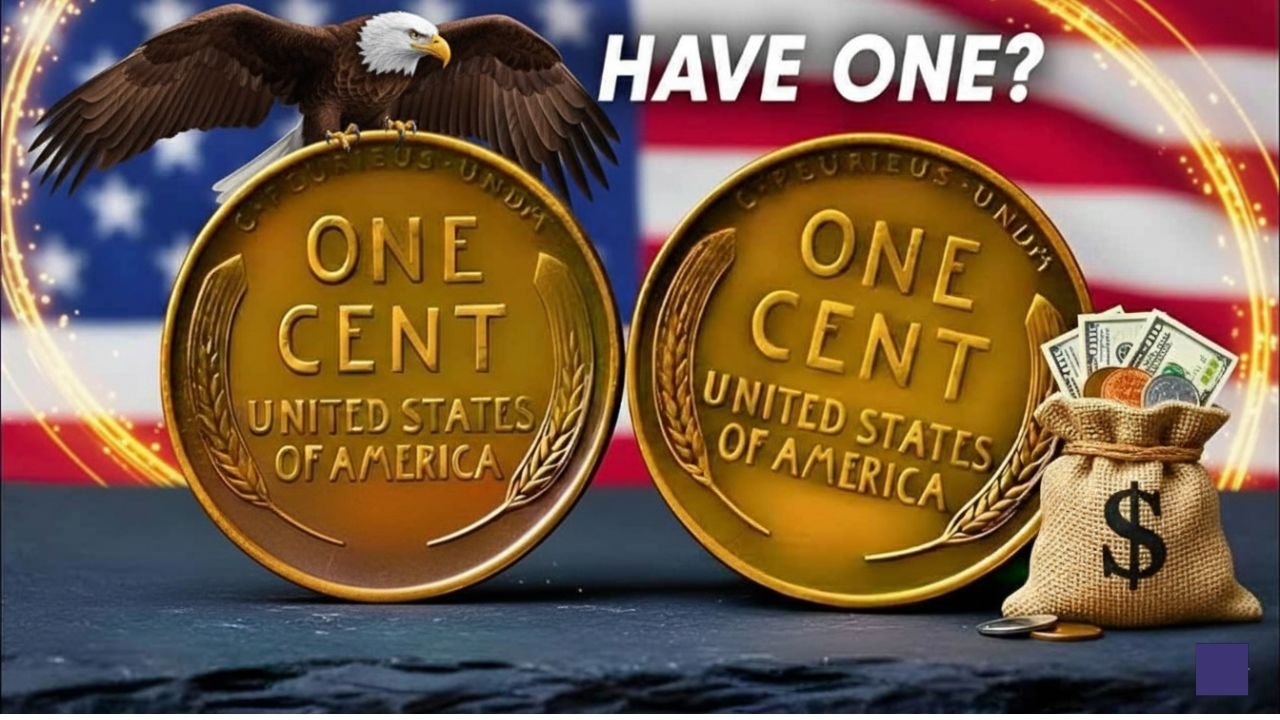
10 Valuable Pennies : For many, the humble penny is simply pocket change. Yet, within the fascinating world of numismatics, certain one-cent pieces transcend their face value to become coveted historical artifacts. These rare coins, born from minting anomalies, limited production, or pivotal moments in history, captivate collectors not just for their monetary worth but for the rich narratives they encapsulate. The following guide explores a selection of extraordinary pennies, each a testament to the idea that great value can come in the smallest of packages.
Reference Table Key Details of Featured Rare Cents
| Coin | Mintage/Rarity Factor | Key Characteristic | Primary Reason for High Value |
|---|---|---|---|
| 1943 Bronze Cent | ~20-30 known | Bronze composition in a steel year | Famous wartime error; extreme rarity |
| 1944 Steel Cent | Fewer than 10 known | Steel composition in a bronze year | Transitional error; great scarcity |
| 1909-S VDB | 484,000 minted | “S” mintmark with VDB initials | One-year only design; low mintage key date |
| 1914-D | 1,193,000 minted | Low mintage Denver issue | Key date scarcity in Lincoln series |
| 1877 Indian Head | 852,500 minted | Lowest mintage of series | Ultimate key date; great demand |
| 1926-S | 4,550,000 minted | Very low San Francisco mintage | Extreme condition rarity in high grades |
| 1969-S Doubled Die | Unknown, but rare | Dramatic doubling on obverse | Popular and pronounced modern error |
| 1955 Doubled Die | Estimated 24,000+ | Iconic doubling on obverse | Most famous double die error; condition rarity |
| 1931-S | 866,000 minted | Depression-era low mintage | High grade examples are exceptionally rare |
| 1856 Flying Eagle | ~2,000 struck | Pattern/small cent transition | Historic significance and great rarity |
1943 Bronze Lincoln Cent
In a striking historical twist, the standard 1943 penny was struck on zinc-coated steel to conserve copper for World War II armaments. However, a minute number of coins were mistakenly struck on leftover bronze planchets from 1942. This error created one of the most legendary coins in American numismatics. With an estimated two dozen known to exist, the 1943 bronze cent is a pinnacle find for any collector. Its value is profound, with auction results consistently soaring into the six figures, reflecting its status as a tangible piece of wartime history.
1944 Steel Lincoln Cent
The mint corrected course in 1944, returning to the traditional bronze alloy. Yet, in another minting oversight, a few steel planchets from the previous year found their way into the presses. These 1944 steel cents are exceptionally rare, with only a handful confirmed to exist. Their stark, silver appearance amidst a sea of copper-colored coins makes them visually unique, and their backstory of transitional error ensures they command prices well over $75,000 in today’s market.
1909-S VDB Lincoln Cent
The inaugural year of the Lincoln cent was marked by controversy. Designer Victor David Brenner’s initials (VDB) were deemed too prominent on the original reverse design. After a limited production run at the San Francisco Mint (denoted by the “S” mintmark), the initials were removed. This makes the 1909-S VDB a one-year rarity within a one-year type, a perfect storm for collectors. High-grade specimens are particularly prized, with values easily exceeding $50,000 for coins in outstanding condition.
1914-D Lincoln Wheat Cent
Struck at the Denver Mint during the early years of the Wheat cent series, the 1914-D had a comparatively low mintage. This scarcity, especially when combined with the challenge of finding a coin that survived over a century in superb condition, has solidified its status as a key date. For collectors assembling a complete set of Lincoln cents, the 1914-D is a formidable hurdle, with pristine examples achieving auction results north of $50,000.
1877 Indian Head Cent
The 1877 issue stands as the undisputed king of the Indian Head cent series. With a mintage under one million coins—a starkly low figure even for its time—it was scarce from the moment it entered circulation. Its rarity is compounded by the passage of time and wear. A well-preserved 1877 Indian Head cent is a cornerstone of any advanced collection of U.S. coinage, with prices for top-condition examples reaching into the six-figure realm.
1926-S Lincoln Wheat Cent
The San Francisco Mint produced fewer than five million pennies in 1926, one of the lowest mintages of the entire Wheat series. While circulated examples are accessible to many collectors, the coin becomes dramatically rare in uncirculated, gem-quality condition. This extreme condition rarity is what drives the value for the finest-known specimens, with some selling for amounts that rival coins with far older dates.
1969-S Doubled Die Obverse Cent
This modern error is one of the most dramatic and sought-after varieties. The coin exhibits clear doubling of the date and inscriptions like “LIBERTY” due to a misalignment in the die production process. Its popularity is fueled by its visible and intriguing error. As a 20th-century rarity with a compelling story, high-grade examples of the 1969-S Doubled Die are highly desirable, often commanding prices that reflect their status as a classic error coin.
1955 Doubled Die Obverse Cent
Perhaps the most famous doubled die error in U.S. coinage, the 1955 penny is iconic. The doubling is distinct and easily visible to the naked eye, making it a favorite among novice and expert collectors alike. While many circulated examples exist, specimens that have never been in circulation and retain their original mint luster are exceptionally rare. These top-tier examples can achieve values that place them among the most valuable modern cents.
1931-S Lincoln Wheat Cent
Minted at the depth of the Great Depression, the 1931-S had a minuscule production run of under one million coins. Circulation took a heavy toll on most survivors. Consequently, finding a 1931-S cent in gem, uncirculated condition is a monumental challenge. The extreme premium for coins in superior preservation has pushed auction prices for the finest examples well beyond the $50,000 threshold.
1856 Flying Eagle Cent
This coin represents a pivotal transition in American currency, a pattern piece that ushered in the era of the small cent. While not a regular-issue coin, it was widely circulated and collected. With an original mintage of only approximately 2,000, it is inherently rare. As a numismatic landmark and a beautiful coin in its own right, the 1856 Flying Eagle cent is a treasure of 19th-century coinage, with values for high-grade specimens reflecting its immense historical importance.
Frequently Asked Questions
Q: How can I tell if my 1943 penny is the rare bronze type?
A: The standard 1943 cent is silver-colored and will be attracted to a magnet. The rare 1943 bronze cent will have the copper color of a normal penny and will not be magnetic. However, be cautious, as some steel cents have been copper-plated by forgers. Authentication by a reputable grading service is essential.
Q: Are any of these rare pennies still found in circulation today?
A: While it is extraordinarily unlikely, it is not entirely impossible. The 1955 Doubled Die and, very rarely, a 1909-S VDB or 1914-D could theoretically surface in an old roll of coins. The ultra-rarities like the 1943 bronze or 1944 steel cent are virtually never found in casual circulation.
Q: What is the single most important factor in a coin’s value?
A: For rare coins, it is a combination of rarity and condition (grade). A coin must be scarce to be valuable, but its condition determines its position within that rare population. A coin in pristine, mint-state condition can be worth hundreds of times more than a worn example of the same date.
Q: Where is the best place to sell a rare penny if I think I have one?
A: Start by having the coin authenticated and graded by a top-tier service like PCGS or NGC. Once encapsulated and verified, you can consign it to a major numismatic auction house, sell it through a trusted coin dealer specializing in rare coins, or list it on a reputable online numismatic marketplace.
Q: Beyond these ten, what makes a penny valuable to collectors?
A: Other factors include mint errors (off-center strikes, repunched mintmarks), varieties, coins with full, original mint luster, and conditional rarity (where high-grade examples of a common date are surprisingly scarce). Historical context and collector demand also play huge roles.
The Enduring Passion for Collecting
The pursuit of these rare cents is driven by more than investment; it is a passion for history, artistry, and the thrill of the hunt. Each coin is a physical fragment of a moment in time—a mint worker’s oversight, a decision during wartime, or an economic circumstance. They connect us tangibly to the past. For collectors, securing one of these treasures is not merely an acquisition; it is becoming a steward of a unique story, ensuring that the legacy of these remarkable small coins is preserved for generations to come.
